
Loading...
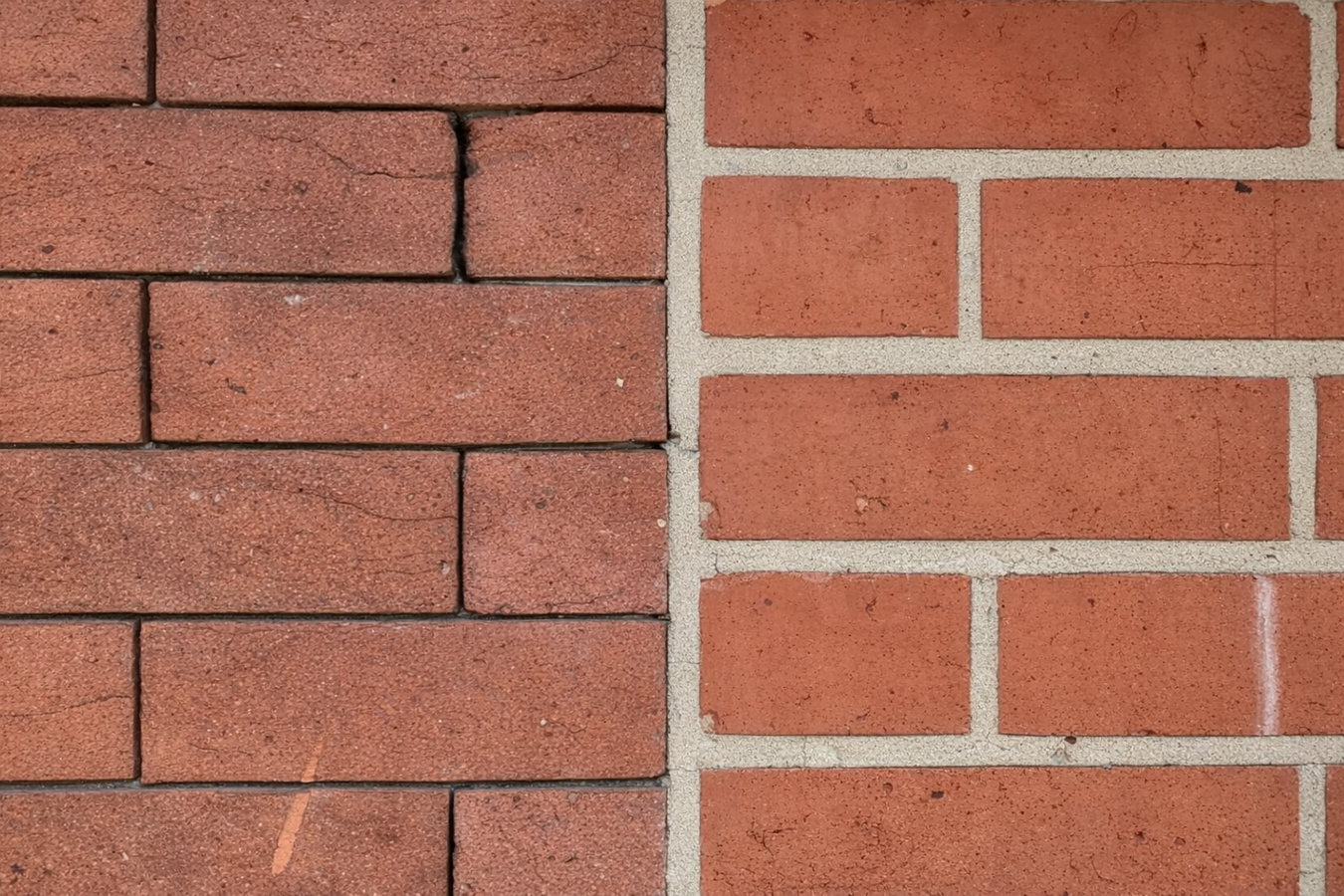
Crumbling mortar joints let Iowa winters do real damage - fresh brick pointing with mortar matched to your home stops that cycle and protects what you have already built.
Brick pointing in Sioux City is the process of removing old, crumbling mortar from the joints between bricks and packing in fresh mortar - most chimney or single-wall projects completed in one to two days, with the new mortar reaching full strength over the following two to four weeks.
The mortar between your bricks is designed to be softer than the bricks themselves - it acts as a sacrificial layer that absorbs movement and cracks instead of the brick. That is intentional. The trade-off is that mortar wears out and needs periodic replacement. In Sioux City, the freeze-thaw cycling that comes with Zone 5b winters accelerates that wear - water finds a hairline crack, freezes, expands, and makes the gap wider. What starts as a surface issue becomes a water infiltration problem before most homeowners notice. Catching failing mortar joints early is almost always the cheaper path.
If your brick has damage beyond the mortar - spalled faces, cracked units, or shifted courses - our foundation repair and tuckpointing services can address the full scope in a single visit rather than treating the symptom and leaving the cause in place.
Run a key or the tip of a screwdriver along a joint on your chimney or exterior wall. Healthy mortar feels hard and resists scratching. If the mortar flakes off easily, feels sandy, or leaves a groove without much pressure, it has lost its binding strength and is no longer sealing out water. This is the most reliable test a homeowner can do without any tools or expertise.
White streaks on your brick - called efflorescence - appear when water moves through the wall, picks up mineral salts, and deposits them on the surface as it evaporates. In Sioux City, this is common after heavy snowmelt or wet springs and means water is already working its way in through failing joints. It is not a cosmetic issue - it is a sign that the mortar needs to be replaced before another winter arrives.
Stand back and look at your chimney or wall from about 10 feet away. Dark gaps, irregular lines, or places where mortar has fallen out entirely mean water can enter straight into the wall. In Sioux City's freeze-thaw winters, each gap that lets water in will be larger by spring than it was in the fall - and that progression does not slow down on its own.
When water gets behind a brick and freezes, it can pop the face of the brick right off - a process called spalling. Bricks with rough, pitted surfaces or small chunks missing from their faces mean water has already been entering through failed mortar for at least one or two winters. The mortar needs replacing now, and some bricks may need to be replaced as well.
We re-point chimneys, exterior walls, foundation brick, and garden or boundary walls - grinding out the old mortar to a consistent depth, packing in fresh material by hand, and tooling each joint smooth. For Sioux City homes built before 1940, we assess the existing mortar and prepare a replacement mix that matches it in hardness and composition. Using a harder modern product on older brick can cause the bricks themselves to crack through over a few winters, so mortar matching is not optional - it is the repair detail that makes the work last. If your project also involves tuck-pointed sections or areas with visible brick damage, our tuckpointing service addresses worn joints across larger wall sections, and our foundation repair service handles structural masonry issues that go deeper than the joint surface.
We test dry mortar samples against your existing brick before committing to a mix - wet mortar looks much darker than dry mortar, so color matching requires dry samples, not eyeballing. We handle permit coordination when the project scope triggers a requirement, and we provide written estimates that break down labor and materials separately so you can compare quotes fairly.
Refreshing worn mortar joints on brick chimneys - suited to Sioux City homeowners whose chimney has not been serviced in 15 or more years, especially before heating season.
Re-pointing mortar joints on brick exterior walls - for homes where the joint lines are visibly recessed, crumbling, or missing material in sections.
Addressing failing mortar at the base of brick foundation walls - where persistent moisture and frost contact accelerate joint deterioration faster than on upper walls.
Testing and matching pre-1940 lime-based mortar on older Sioux City homes - so the repair is compatible with the original brick and does not transfer stress to the masonry units.
Preparing dry mortar test patches before committing to a mix - for homeowners concerned about visible repairs that blend with weathered brick rather than standing out as a fresh patch.
Targeted joint repair on limited sections - for homeowners who caught a small area of mortar failure early and want it addressed before it spreads through the next winter.
Sioux City sits in USDA Hardiness Zone 5b and regularly sees temperatures drop below zero in January before swinging back above freezing within the same week. Every time moisture in a failing mortar joint freezes, it expands and pushes the gap wider. That cycle repeats dozens of times each winter. Mortar joints that would last 40 or more years in a mild climate may need attention after 25 to 30 years here - and homeowners who let small failures go through two or three winters typically face a much larger repair than they would have with early action. Sioux City's older neighborhoods - Morningside, the North End, and the downtown core - concentrate a high share of homes built between 1890 and 1950, where original mortar may never have been replaced. Homeowners in Sergeant Bluff, IA face the same freeze-thaw exposure and the same need for mortar work timed before the season closes the window on safe curing.
The Missouri River proximity adds a humidity factor that accelerates mortar deterioration on lower-lying properties. Homes near the riverfront or in low areas experience higher ambient moisture, and any home that has shown efflorescence - white chalky staining on the brick face - already has water working through the wall through failed joints. The scheduling window for brick pointing in Sioux City also runs shorter than most homeowners expect - mortar needs temperatures reliably above 40 degrees Fahrenheit to cure properly, which leaves roughly April through October as the usable season. Spring and fall slots with local contractors fill quickly. Homeowners in Vermillion, SD share a similar scheduling window and benefit from booking before the busy spring season opens.
Tell us where the brick is located, roughly how much looks damaged, and whether you have noticed any water getting inside. We will follow up within 1 business day to schedule a free on-site estimate. Spring and fall are busy seasons - if you are calling in April or September, reach out early to get on the schedule.
We walk your chimney or wall, check how deep the mortar damage goes, whether any bricks need replacing, and whether the existing mortar is a type that requires a specific replacement mix. You receive a written estimate that breaks down labor and materials separately - no single-number quotes with no explanation.
For older Sioux City homes, we prepare dry mortar test patches against your existing brick before committing to a mix. Wet mortar looks much darker than dry mortar - color matching requires dry samples. Once the mix is confirmed and the schedule is set, clear the work area of furniture and close windows on the work side of the house.
The crew grinds out the old mortar - the noisy part - then packs in fresh material and tools each joint flush. Before leaving, the crew cleans mortar smears off the brick face. New mortar needs 24 to 48 hours to set before it gets wet - if rain is forecast, we either reschedule or protect the work with plastic sheeting.
Free written estimate. Mortar color matched to your home. We reply within 1 business day.
(712) 574-8684Wet mortar looks significantly darker than dry mortar. A mason who eyeballs the color while it is wet will often end up with joints that look too light once everything cures. We prepare test patches and let them dry before mixing the full batch - so the finished joints blend with your existing brick rather than standing out as a fresh patch.
Sioux City's Morningside, North End, and downtown neighborhoods are full of homes built before 1940 with lime-based mortar that flexes differently than modern mixes. Applying a harder modern product to those walls transfers stress to the bricks themselves and can cause cracking. We assess the existing mortar before selecting a replacement - so the repair is compatible, not damaging.
We have pointed chimneys and walls in established Sioux City neighborhoods - including older areas where pre-1950 construction requires mortar knowledge that a contractor without local history may not have. The references we can provide come from properties like yours in this city.
You will know exactly what the job costs before anyone picks up a tool. Our estimates break down labor and materials separately so you can compare them clearly. The National Park Service Preservation Briefs on repointing historic masonry inform our approach to older Sioux City structures where material compatibility is critical.
Brick pointing is one of the few home repairs where the difference between good work and poor work is almost invisible when it is fresh - and only becomes apparent after the first hard winter. These are the details that separate a repair that holds for 25 years from one that needs redoing in five.
For permit requirements in Sioux City, contact City of Sioux City Development Services. The Brick Industry Association publishes technical guidance on mortar selection and repointing best practices.
Addressing structural masonry issues at the foundation level - for Sioux City homes where water infiltration through failed joints has worked its way to the base of the wall.
Learn MoreRestoring mortar joints across larger wall sections - for properties where deterioration covers more surface area than a targeted re-pointing job can address efficiently.
Learn MoreFall booking slots fill fast - lock in your date before cold weather closes the window on safe mortar work.