
Loading...
Crumbling mortar, spalling brick faces, and stair-step cracks get worse with every freeze-thaw cycle. We find the cause, fix it correctly, and match the repair to your existing brickwork.
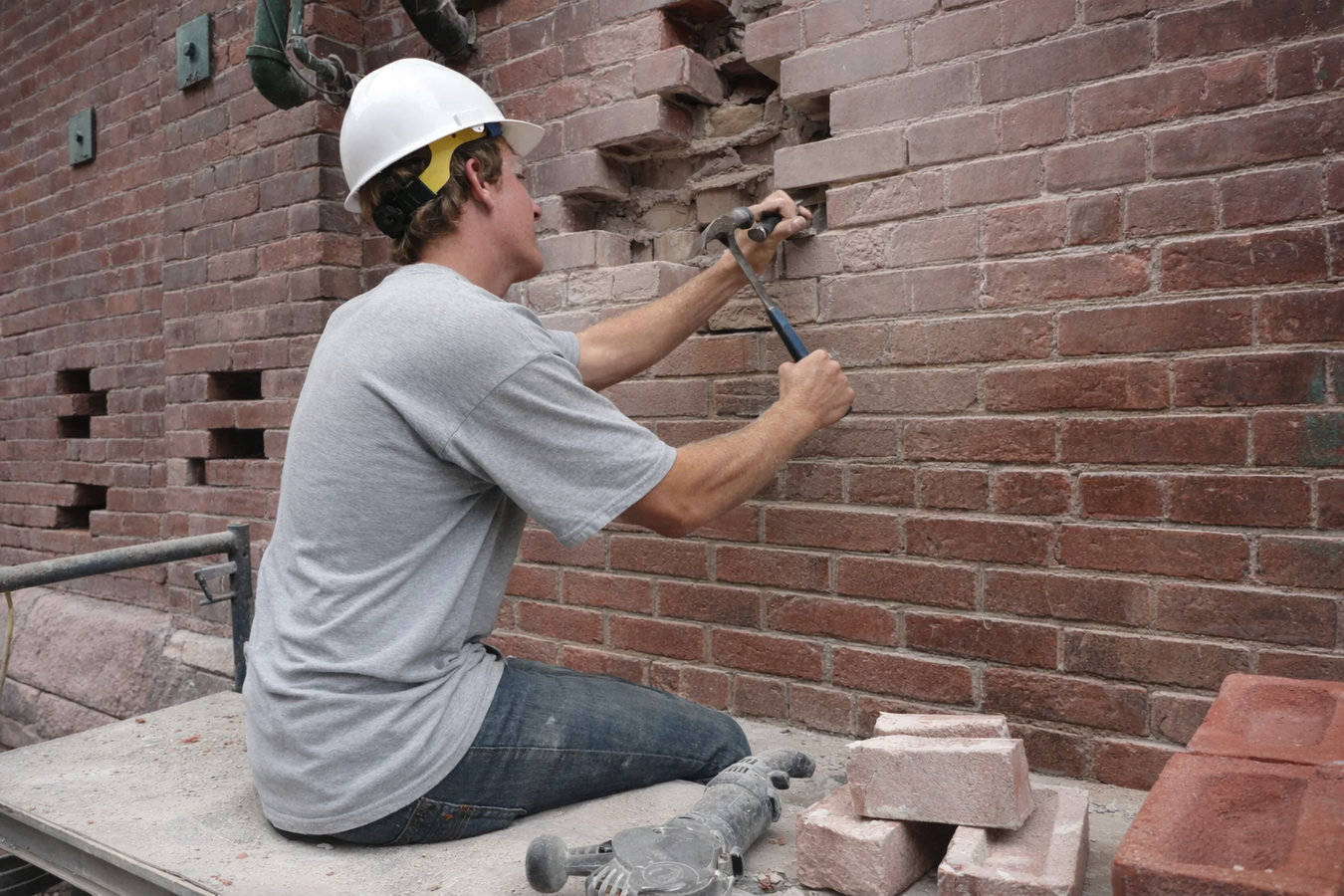
Brick repair in Sioux City covers removing deteriorated mortar, replacing damaged or spalled bricks, and addressing stair-step cracks caused by settling - most standard jobs on a section of wall or chimney wrap up in one to two days on-site.
The real risk with brick damage is not what you can see - it is what happens next. Once mortar fails or a brick face starts to flake, water finds a path into your wall. In Sioux City's climate that water freezes, expands, and makes the gap wider every winter. By the time you notice a damp spot on an interior wall or water getting into your basement near a brick section, the damage has typically been building for at least one or two seasons.
Brick repair often goes hand-in-hand with masonry restoration when a wall or chimney has extensive weathering across multiple materials. If the damage is primarily in the joints rather than the brick faces themselves, targeted driveway pavers and flatwork repairs may also be part of the same site visit for homes with aging concrete and masonry across the property.
Run your hand along the joints between bricks on your chimney, exterior wall, or front steps. If the mortar feels soft, crumbles when pressed, or has gaps you can fit a finger into, it is no longer sealing the wall. In Sioux City's climate, open joints like these will let water in before the next winter and freeze-thaw cycles will make the problem significantly worse.
Cracks that zigzag diagonally across brickwork - following the mortar joints in a stair-step pattern - often signal that the structure has shifted or settled. Given Sioux City's varied soil conditions near the bluffs and river corridor, this type of cracking is not uncommon in older neighborhoods. These cracks tend to grow, so earlier inspection leads to less costly repair.
White powdery residue on brick is efflorescence - salt carried to the surface by moisture moving through the wall. It is not dangerous on its own, but it is a reliable indicator that water is getting in somewhere. In Sioux City, this commonly appears in spring after snowmelt has been working its way through damaged mortar all winter.
When the surface layer of a brick starts to flake away or small chunks pop off - called spalling - it usually follows years of moisture getting in and freezing. Once a brick starts spalling, the exposed interior absorbs more water and the damage accelerates. This is especially common on north-facing walls and chimneys where sun exposure is limited and surfaces stay damp longer.
Every brick repair job starts with identifying what is actually wrong - not just what is visible. A stair-step crack that looks like a surface problem may trace back to settling, which needs to be understood before the brickwork is touched. A spalled brick face points to moisture intrusion that may have reached the wall interior. We assess the full picture first, then repair in the right sequence. For homes in Sioux City's older neighborhoods - many built before the 1950s with softer lime-based mortar - matching the repair mortar to the original mix is one of the most important steps. Using today's hard cement mortar on a pre-war brick home forces stress into the bricks rather than the joints, and that leads to cracking that is more expensive to fix. We reference National Park Service Preservation Briefs guidance on historic mortar matching for older structures, which matters for homes that may fall under masonry restoration standards in Sioux City's historic districts.
We also coordinate brick repair with related work when it makes sense. Chimneys that need both mortar repointing and replacement of individual damaged bricks can be addressed in one visit rather than two separate mobilizations. When a wall shows signs of moisture intrusion that extends to the concrete flatwork around the foundation - a common situation in Sioux City homes near the river corridor - we bring in our driveway pavers and flatwork knowledge to address drainage and surface issues as part of the same project.
For walls and chimneys where joints have deteriorated but the brick faces are still sound - mortar is removed and replaced with a matched mix.
Best when specific bricks are cracked, spalling, or missing - damaged units are removed and replaced with material matched in color and texture.
Suited for homeowners who have noticed diagonal cracking along joint lines, often related to settling - assessment of the underlying cause comes first.
Ideal for chimneys showing a combination of spalling bricks and failing joints after Sioux City winters - both issues addressed in one visit.
Sioux City averages more than 30 freeze-thaw cycles per year, and each one is a small event that works against any crack or open joint in your brickwork. Water gets into the gap, freezes, and expands - pushing the crack a fraction wider. Repeat that three dozen times in a single winter and a small problem becomes a significant one. Homeowners throughout Sioux City, IA consistently find that brick damage discovered in the spring is noticeably worse than it was the previous fall - and that waiting one more season usually means a more extensive repair.
The city's housing stock makes this especially relevant. Large portions of Sioux City's neighborhoods - the North Side, Morningside, and downtown-adjacent areas - were built between the 1890s and the 1940s with soft lime-based mortar that has now reached or exceeded its natural lifespan. Soil conditions also vary across the city due to the bluffs and river corridor, which means settling-related stair-step cracks are a recurring issue in older homes. Residents in South Sioux City, NE across the river face similar conditions on any brick structures built during the same era.
Call or submit a request online. We respond within one business day. We will ask where the damage is, roughly how much of it there is, and whether your home is older. Spring and fall are our busiest times in Sioux City, so reaching out early gives you more scheduling flexibility.
We walk around the affected area, probe mortar to test how soft or deteriorated it is, and look for any signs of structural movement or water damage beyond the visible surface. This visit usually takes 20 to 45 minutes, and a written estimate follows within a day or two.
Your estimate spells out what work will be done, what materials will be used, and how long the job is expected to take. If your home is older - especially pre-1950 - we specify how we plan to match the existing mortar. You confirm a start date after reviewing the scope.
The crew arrives, sets up near the work area, and completes the repair. Fresh mortar needs 24 to 48 hours before it can handle rain. Before leaving, we walk you through what was done and note anything to keep an eye on. The repaired area may look lighter in color at first - that is normal as new mortar cures.
Free estimates, written scope, no pressure. We respond within one business day.
(712) 574-8684A significant share of Sioux City homes were built before 1950 with lime-based mortar that must be matched carefully. We assess existing mortar before selecting a repair mix - using the wrong material causes brick cracking that is more expensive than the original problem.
Stair-step cracks that keep coming back after repair usually have an underlying cause - settling, drainage, or soil movement near Sioux City's bluffs. We look for the source before picking up a trowel, so the repair addresses the actual problem.
We take time to match color, texture, and joint profile to your existing brickwork. A patch that stands out from across the street is a sign of rushed work. The Brick Industry Association outlines the standards for repair appearance and material compatibility that we follow on every job.
We have done brick repair work in Sioux City and the surrounding communities since 2015. We know the neighborhood housing stock, the brick types common in different parts of the city, and what the local climate does to masonry over time.
When the repair is done right the first time - correct mortar, correct materials, correct understanding of the cause - you are not calling someone back the following spring. That is what we aim for on every job.
Paver installation and repair for driveways and aprons on properties where masonry and hardscape work is being done together.
Learn MoreBroader restoration work for walls, facades, or structures with weathering across multiple materials beyond individual brick and mortar repairs.
Learn MoreEvery freeze-thaw cycle widens existing cracks. Call now or submit a request and we will respond within one business day.